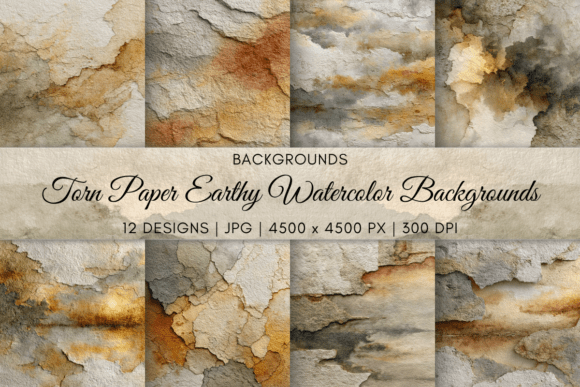
Grounding Your Design: Torn Paper Earthy Watercolor Backgrounds
In a digital world saturated with perfect vector shapes and flawless gradients, there is a growing hunger for something more tactile, more human. Designers and creators are constantly searching for assets that break the sterile perfection of the screen and introduce a sense of warmth and authenticity. This is precisely where the power of Torn Paper Earthy Watercolor Backgrounds comes into play. They are not just a collection of textures; they are a bridge between the digital canvas and the tangible, organic world, offering a foundation that feels both rustic and incredibly sophisticated.
The Unmistakable Character of Organic Textures
What sets these backgrounds apart is their unique visual personality. They capture the raw, imperfect beauty of nature, translating it into a versatile digital asset. Imagine the subtle bleed of watercolor pigments on thick, fibrous paper, now imagine that paper carefully torn by hand. You get the soft, diffused edges of ochre, sienna, and slate grey meeting the sharp, fibrous, deckle-edge of the tear. This combination creates a stunning visual depth that is difficult to replicate manually.
The appeal lies in this duality. The watercolor element provides a gentle, flowing energy, while the torn paper edge introduces a rugged, architectural structure. It is a style that communicates authenticity and craftsmanship. Unlike a flat, digital gradient, these textures have a story. They suggest a process, a human hand, and a connection to the earth. This makes them a powerful tool for anyone looking to infuse their work with a sense of groundedness and real-world substance.
A Strategic Asset for Brand Identity and Marketing
For entrepreneurs, marketers, and brand strategists, the choice of design assets is critical to shaping audience perception. A brand built on earthy, organic tones naturally communicates values of sustainability, wellness, authenticity, and handmade quality. Integrating Torn Paper Earthy Watercolor Backgrounds into a brand identity can instantly anchor a company in these concepts.
Consider a small-batch coffee roaster, a skincare line using natural ingredients, or a boutique travel agency focusing on eco-tourism. For these businesses, a slick, hyper-modern digital aesthetic might feel disconnected from their core mission. Instead, using these backgrounds for their website hero images, social media posts, or packaging mockups creates an immediate and powerful connection with their target audience. It tells a story before a single word is read. This is modern typography and visual strategy working in harmony—using texture to build a narrative.
Practical Applications Across Creative Fields
The versatility of this collection is one of its greatest strengths. As a set of high-resolution, 4500x4500 pixel JPGs, the possibilities are nearly endless. Here are a few ways different professionals can leverage these assets:
- For Publishers and Authors: Use these as striking book cover backgrounds, especially for genres like historical fiction, poetry, memoirs, or nature writing. They also work beautifully for chapter title pages or special edition endpapers, adding a layer of tactile elegance to the reading experience.
- For Graphic Designers: These are a perfect complement to a wide range of fonts. Pair them with a classic serif font for a timeless, literary feel. Combine them with a clean sans serif font to create a compelling contrast between modern typography and raw texture. They can even provide a rich backdrop for a delicate script font or handwritten font, making the lettering pop.
- For Social Media Managers and Bloggers: Create a cohesive and visually arresting feed on platforms like Instagram or Pinterest. Use the backgrounds for quote graphics, announcement posts, or as a consistent visual theme for a blog. The earthy palette is calming and sophisticated, helping to build a recognizable and professional online presence.
- For Event Planners and Individuals: Design stunning wedding invitations, menus, or place cards that feel personal and luxurious. The rustic elegance of the torn paper effect is perfect for events with a natural, bohemian, or autumnal theme.
Making It Work: A Practical Guide to Implementation
Simply placing a beautiful background behind your content isn't enough. To truly harness its potential, you need to think about integration and hierarchy. The rich texture of these backgrounds means they are a creative font and design element in their own right.
First, consider readability. The busy, organic patterns can sometimes compete with text. To ensure your message is clear, use techniques like placing a semi-transparent color overlay over a portion of the background, or positioning your text within a quieter area of the texture. Another effective method is to use a solid-colored box or banner for your main text, allowing the torn paper texture to frame it beautifully.
Second, think about font pairing. The goal is to create a harmonious relationship between the text and the texture. A bold, geometric sans serif font can provide a strong, modern counterpoint to the rustic background. A traditional serif font can lean into the classic, storybook quality. Avoid overly decorative or complex fonts that might get lost in the texture. The key is to test different combinations to see what best serves the project's tone and purpose.
Finally, remember the value of consistency. With 12 unique designs in the collection, you have enough variety to create a dynamic visual system without becoming repetitive. You can use one background for your main branding, another for secondary materials, and a third for special promotions, all while maintaining a cohesive brand identity rooted in that earthy, organic aesthetic. This collection of premium font