Distressed Grunge Texture Backgrounds: Adding Authentic Edge to Your Designs
There's something immediately compelling about a surface that shows its history. A peeling paint wall, a rusted metal panel, a piece of wood weathered by decades of sun and rain. These textures carry a sense of authenticity that polished, flawless surfaces simply can't replicate. Distressed grunge texture backgrounds capture that raw, lived-in quality and make it available for your creative projects. Whether you're working on a brand identity, social media campaign, editorial layout, or personal craft project, these textures add depth and character that draw people in.
What Makes These Textures So Effective
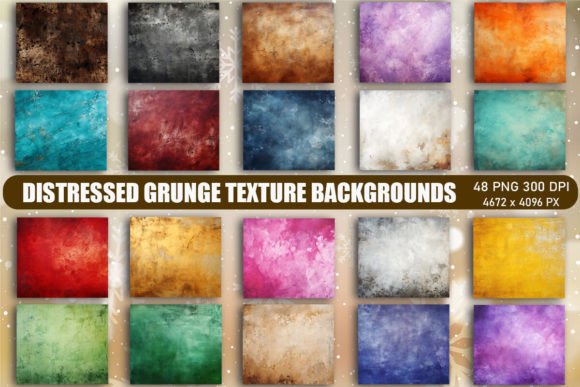
The Distressed Grunge Texture Backgrounds collection from Lazysun offers 48 high-resolution PNG files, each sized at approximately 4672 x 4096 pixels at 300 DPI. That resolution means you can scale them for everything from a small business card to a large-format banner without losing quality. The files cover a range of retro grunge textures and antique distressed backgrounds, each with its own personality. Some lean toward subtle grain and soft aging. Others go heavier, with pronounced scratches, stains, and uneven surfaces that feel like they've been pulled from an abandoned warehouse.
What makes these weathered texture backdrops work so well is their versatility. They aren't tied to a single aesthetic. You could layer one under a minimalist sans serif font for a modern editorial look, or pair it with a vintage-inspired script font for a craft brewery label. The textures themselves don't demand attention. Instead, they create a mood. They give your design a sense of place and time, which is something audiences respond to on an instinctive level.
Where These Backgrounds Shine in Real Projects
Let's talk about practical applications. As a designer or business owner, you're probably juggling multiple types of projects. Here's where distressed grunge texture backgrounds tend to make the biggest impact.
Branding and Logo Design: If you're building a brand identity for something with an artisan, vintage, or rugged personality, these textures can become a foundational design asset. Think about a craft coffee roaster, a motorcycle shop, or an outdoor adventure company. A subtle grunge texture behind a logo or across brand collateral instantly communicates authenticity. It tells your audience this brand has substance.
Packaging and Print Design: Product packaging benefits enormously from texture. A retro grunge texture applied to a label background can elevate a bottle of hot sauce or a bag of specialty tea from generic to memorable. The same applies to business cards, postcards, and invitations. A distressed background gives printed materials a tactile quality, even though they're flat. It tricks the eye into feeling something.
Digital and Social Media: On screens, texture breaks up the monotony of flat color backgrounds. Use these antique distressed backgrounds behind quote graphics, promotional banners, or website hero sections. They add visual interest without competing with your typography or messaging. The key is to keep the texture subtle enough that your text remains readable. At 300 DPI, you have plenty of room to reduce opacity, desaturate, or crop into the texture to find the sweet spot.
Editorial and Publishing: If you're designing magazine layouts, book covers, or blog graphics, weathered texture backdrops work beautifully as layered elements. They can ground a headline, create separation between sections, or give a feature spread a cinematic quality. Pair them with a strong serif font for long-form content or a clean sans serif for a more contemporary editorial feel.
Craft and Personal Projects: Scrapbooking, handmade cards, DIY wall art, and party decorations all benefit from textured backgrounds. Because these files are high-resolution PNGs, you can print them at home or through a professional printer and get clean, detailed results.
Working With Texture: Practical Considerations
Adding a distressed grunge texture to a project sounds straightforward, but there are a few things worth thinking through to get the best results.
Readability Comes First: Texture is a supporting element. Your message is the star. If you're placing text over a busy grunge background, consider reducing the texture's opacity to around 20-40 percent. Alternatively, use a solid color overlay between the texture and your text. This creates enough contrast that your typeface stays legible while the texture still peeks through and adds character.
Match Texture to Tone: Not every project calls for heavy distress. A law firm's website probably isn't the right setting for a scratched, rusted metal backdrop. But a vintage-themed wedding invitation? Perfect. Before choosing a texture from the collection, think about the emotional tone you want to set. The Distressed Grunge Texture Backgrounds set includes 48 options, so you have plenty of range from subtle to dramatic.
Test Your Font Pairings: Texture interacts with type in interesting ways. A bold display font with thick strokes tends to hold up well against a busy background. Thin, delicate scripts can get lost. If you're working with a handwritten font or a lighter serif font, try placing the texture only in areas where text isn't present, or use it as a border element rather than a full background.
File Format Awareness: These are PNG files, not SVG or layered vector files. That means they're raster-based and designed for backgrounds, overlays, and print. They aren't meant for cutting machines like Cricut or Silhouette. If you need a texture for digital cutting, you'd need to convert or trace it separately. For everything else, PNGs are ideal because they preserve detail and transparency options.
Color and Device Variability: One thing to keep in mind with any digital design asset is that colors will look different depending on the screen or printer. A texture that looks warm and golden on your monitor might shift slightly on a client's screen or when printed on uncoated paper. Always do a test print or screen check before finalizing a project, especially for commercial work.
Making Texture Part of Your Design Toolkit
The best design assets are the ones you reach for again and again. Distressed grunge texture backgrounds earn that spot because they solve a common creative challenge: how to add warmth, depth, and personality to a flat surface. Whether you're a freelance designer building client presentations, a small business owner creating social media content, or a crafter working on a personal project, having a library of high-quality textures at your fingertips saves time and expands your creative options.
This particular collection from Lazysun is generous in both quantity and resolution. Forty-eight textures at nearly 5000 pixels wide gives you enough variety to avoid repetition across projects and enough resolution to work at any scale. Resize them, layer them, blend them with color overlays, or use them as-is. The files arrive in a ZIP folder, so make sure you know how to extract them on your computer before purchasing.
Texture doesn't have to dominate a design to make a difference. Sometimes the most effective use of a retro grunge texture is barely noticeable. It's the background that makes a logo feel grounded. It's the subtle grain that makes a social media post feel more human. It's the weathered surface that makes a printed invitation feel like it has a story to tell. That's the real value of these antique distressed backgrounds. They don't just fill space. They create feeling.