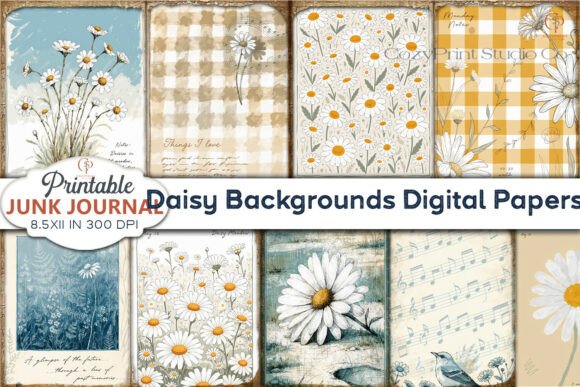
Daisy Backgrounds Digital Papers: Beyond the Surface
When we talk about visual design, we often fixate on the text, the typography, and the layout. However, the texture—the physical "feel" of a design—is what often separates a flat image from a tactile experience. This is where Daisy Backgrounds Digital Papers come into play. While not a traditional typeface, this collection functions as a critical design asset, providing the visual weight and atmosphere that allows your typography and layouts to truly shine. It is a collection of textures, specifically curated to evoke a sense of organic, vintage, and whimsical charm. The visual personality here is distinctly floral, featuring daisies that range from hand-drawn sketches to vibrant, stylized blooms, all set against backgrounds that suggest age, wear, and authenticity.
The appeal of this collection lies in its versatility and its inherent warmth. Unlike a sterile, digital-only aesthetic, these papers bring a human touch. They are designed to look like they have been handled, loved, and used. For a designer or a crafter, this means you are not just buying a file; you are acquiring a piece of visual history that can be layered into your work. The files are delivered as high-quality JPEGs at 300 DPI, ensuring that whether you are printing them out for a physical project or using them digitally, the clarity and detail remain intact. The 8.5 x 11 inch size makes them immediately practical for standard printing needs, eliminating the need for complex resizing or cropping for many common applications.
The Anatomy of a Texture: Visual Characteristics and Style
Understanding the visual language of Daisy Backgrounds Digital Papers is key to using them effectively. These are not generic stock photos. They are carefully constructed layers of design. You will notice a deliberate interplay between the foreground elements—the daisies—and the background textures. Some pages feature bold, graphic daisies that demand attention, perfect for use as a focal point in a collage or as the backdrop for a striking headline. Others offer more subtle, muted patterns where the flowers are faded or partially obscured, creating a "worn" look that is ideal for vintage-style projects.
The "junk journal" aspect of this collection is particularly noteworthy. Junk journaling is an art form that celebrates imperfection and the beauty of the found object. These digital papers mimic that aesthetic perfectly. They often include stains, creases, and aged edges that give them an authentic, time-worn character. For a brand strategist or a marketer, this presents a unique opportunity. In a world saturated with sleek, minimalist, and often impersonal branding, using a texture like this can inject personality and authenticity into your materials. It tells a story of craftsmanship and care, which can resonate deeply with audiences who are tired of mass-produced, digital-only experiences. The style is inherently nostalgic, evoking a sense of simpler times, handwritten letters, and cherished memories, making it a powerful tool for emotional connection.
Practical Applications: From Junk Journals to Brand Identity
The true value of any design asset lies in its application. Daisy Backgrounds Digital Papers are exceptionally versatile, bridging the gap between personal craft projects and professional commercial work. For the hobbyist and the crafter, the applications are nearly endless. These papers are the foundation of beautiful junk journals, where they can be used as covers, signature wraps, or background layers for ephemera. In scrapbooking, they provide a rich, textured canvas that enhances photographs without overpowering them. Card makers will find them invaluable for creating unique, handmade greetings that stand out from store-bought options. Even for simple planner decoration, a snippet of a daisy paper can transform a mundane weekly spread into a source of inspiration.
For designers, entrepreneurs, and content creators, the utility extends into the professional realm. Consider the power of a unique background in social media graphics. A post featuring a subtle, aged daisy texture immediately feels more artisanal and thoughtful than one with a flat, solid color. It can be used to create cohesive Instagram stories, Pinterest pins, or Facebook covers that build a recognizable visual brand. In packaging design, especially for small businesses selling handmade goods, botanicals, or vintage items, these papers can be used to create labels, tags, and wrapping that reinforce the product's story. They are also excellent for editorial design, such as magazine layouts or blog headers, where a touch of organic texture can break up the monotony of text-heavy pages.
Integrating Texture into Your Design Workflow
Working with digital papers like these requires a slightly different mindset than working with fonts, but the principles of good design still apply. The first step is always to consider the context. What is the message you are trying to convey? If your project is about modern, cutting-edge technology, a vintage floral texture might create a jarring dissonance. However, if your project is about nature, wellness, heritage, or handmade quality, these papers are a natural fit. It is about aligning the visual texture with your brand identity and the specific goals of the project.
Once you have determined a good fit, think about hierarchy and readability. A busy, vibrant daisy paper can be overwhelming if used as a full background behind a lot of text. In such cases, consider using it as a border, a header, or a small accent element. You can also adjust the opacity or apply a color overlay in your design software to mute the pattern, allowing your text to remain the primary focus. This is a common technique in modern typography, where a subtle texture can add depth without sacrificing legibility. For print projects like junk journals or scrapbooks, the physical act of layering is key. Print several pages, cut them into shapes, and experiment with how they overlap. The beauty of these digital files is that you can print as many copies as you need, allowing for endless experimentation without wasting expensive physical materials.
Choosing and Evaluating Your Design Assets
When you download the Daisy Backgrounds Digital Papers, you receive 10 distinct JPEG files. It is worth taking the time to review each one individually. Look at the color palette, the scale of the daisy motifs, and the intensity of the background texture. Some will be better suited for bold, graphic projects, while others will excel as subtle, supporting elements. Consider how they will pair with the other elements in your design. If you are using a strong, modern sans serif font for your headlines, a vintage floral paper can create a beautiful, high-contrast pairing that feels both contemporary and timeless. If you are using a delicate script font, a more muted, aged paper might be a better complement.
For commercial use, it is always wise to check the licensing terms provided with your download. While most digital papers of this nature are licensed for a wide range of commercial applications, understanding the specifics ensures you can use your new assets with confidence. This collection, with its instant download format, is designed for immediate integration into your workflow. There is no waiting for shipping, no risk of damage in transit. The files are ready to be unzipped, opened in your preferred software—whether that is Adobe Photoshop, Canva, Procreate, or even a basic word processor for simple printables—and put to work. They are a practical, high-quality resource for anyone looking to add a layer of authentic, handcrafted beauty to their creative projects.